Every Expert Was Once a Beginner SVG Review
As a designer who has spent years navigating the fine line between a digital concept and a stitched reality, I approach every new machine embroidery design with a critical eye. The market is flooded with generic clip art, so finding a piece that translates well from screen to fabric is a genuine challenge. When I first opened the package for Every Expert Was Once a Beginner SVG, I wasn't just looking at a graphic; I was evaluating its potential as a functional asset for my craft business. This specific design carries a message of encouragement and humility, which resonates deeply in maker communities, but does it hold up under the scrutiny of a professional stitch?
First Impressions: Visual Weight and Mood
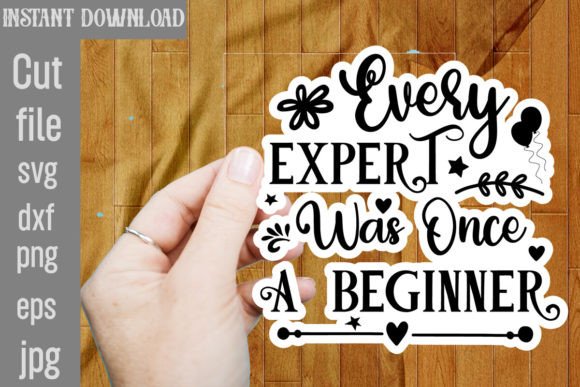
The initial visual impact of Every Expert Was Once a Beginner SVG is one of balanced simplicity. In the realm of T-Shirt Designs and general Graphics, text-heavy pieces often struggle when converted into an embroidery file. Too many serifs or thin lines can result in thread breakage or muddy details. However, this design manages to maintain legibility without feeling cluttered. The typography suggests a modern, hand-drawn aesthetic that pairs exceptionally well with organic textures.
When I visualize this on a finished product, the mood shifts immediately from corporate to personal. It feels like a badge of honor for someone learning a new skill, whether they are knitting, coding, or painting. For an Etsy seller or a small shop owner, this kind of emotional connection is vital. It transforms a simple item into a personalized gift that speaks directly to the recipient's journey. The layout allows for flexibility, meaning it doesn't force a specific color palette, giving you room to experiment with different thread colors to match your brand identity.
Real-World Application: From Tote Bags to Sweatshirts
To truly test the viability of Every Expert Was Once a Beginner SVG, I imagined a specific project: a heavy-duty canvas tote bag for a local pottery workshop. These workshops often sell merchandise to students, and this phrase would be perfect for a beginner's kit. On a sturdy canvas, the design would likely require a combination of fill stitch for the main body of the letters and perhaps a delicate running stitch or satin stitch border to add definition. The contrast between the thick, textured canvas and the smooth, raised embroidery creates a tactile experience that customers love.
I also considered using this for sweatshirt embroidery. Fleece and cotton blends have a natural nap that can sometimes swallow intricate details. Because Every Expert Was Once a Beginner SVG avoids overly complex internal detailing, it should perform admirably on these softer fabrics. The design would sit comfortably on the chest pocket area or across the back, serving as a conversation starter. For baby embroidery projects, such as a onesie or a nursery pillow cover, the gentle nature of the message makes it ideal. Parents often look for items that celebrate growth, and this design fits that narrative perfectly without being too loud or chaotic.
Navigating Challenges: Fabric Texture and Hoop Size
While the design is robust, there are scenarios where caution is required. If you are planning to use this for an embroidered patch on a curved surface like a cap, you must pay close attention to the hoop size. Curved surfaces distort straight lines, and if the design is too wide, the text may appear warped once stitched. Always check the dimensions against your specific cap hoop before committing to the final run.
Another critical factor is the fabric texture. On highly textured materials like linen or denim, the interplay between the weave and the stitch density can be tricky. If the design relies on very fine lines, they might get lost in the grain of the fabric. In such cases, increasing the stitch count slightly or using a higher loft stabilizer can help the design pop. Conversely, on thin or stretchy fabrics like jersey knit, the risk of puckering is real. You will need a high-quality stabilizer and potentially a tear-away backing to ensure the finished product remains flat and professional after washing.
Dark fabrics present their own set of challenges. While the PNG file included in the download offers a transparent background for digital mockups, the actual stitching requires careful color selection. Light-colored threads on dark backgrounds need a solid fill underneath to prevent the fabric from showing through the gaps in the fill stitch. Before running a full batch, always create a printable mockup or a physical test swatch to confirm that the contrast is sufficient for readability.
Technical Considerations for the Digital Download
The package for Every Expert Was Once a Beginner SVG includes a comprehensive set of files: one SVG for Cricut, one DXF for Silhouette, one EPS vector, and one 300 Dpi PNG. For those of us primarily focused on digital embroidery file creation, the vector formats (SVG, DXF, EPS) are invaluable. They allow you to resize the design without losing quality, which is essential when adapting a single asset for various applications, from a small apron label to a large wall hanging.
However, remember that this is a digital download intended for cutting machines or vector editing software, not a direct .PES or .DST file for an embroidery machine. As a designer, this means you will need to convert these vectors into a stitch file using your preferred software. During this conversion process, review the node points carefully. Sometimes, vector paths can be overly complex, leading to unnecessary jump stitches. Simplifying the path before generating the stitch file can save time and thread during production.
Strategic Advice for Craft Business Owners
If you are considering adding Every Expert Was Once a Beginner SVG to your catalog of commercial embroidery assets, think about the broader context of your brand. Does this message align with your values? For a boutique focusing on empowerment and creativity, this design is a strong fit. It encourages engagement and builds trust with customers who see themselves in the words.
Before launching a product line, conduct a thorough test. Stitch the design on scrap fabric that matches your intended final material. Check the tension, the alignment of the text, and the overall durability. Wash the sample to ensure the threads don't fade or fray. This step is non-negotiable for maintaining professionalism. A poorly executed stitch job can damage your reputation faster than a lack of inventory.
Finally, always verify the licensing terms. While the product description mentions it is a digital download, you must confirm whether the license covers selling finished goods or if there are restrictions on commercial use. Understanding these boundaries protects your business and ensures you remain compliant with the creator's guidelines.
Final Thoughts on Design Utility
Every Expert Was Once a Beginner SVG is more than just a pretty graphic; it is a versatile tool for the modern maker. Its strength lies in its clarity and emotional resonance, making it suitable for everything from holiday gifts to custom apparel. By taking the time to understand its limitations regarding fabric types and hoop sizes, you can leverage this design to create high-value, handmade products that stand out in a crowded market. Whether you are a hobbyist creating a unique gift or a seasoned entrepreneur scaling your shop, this design offers a solid foundation for creative expression.